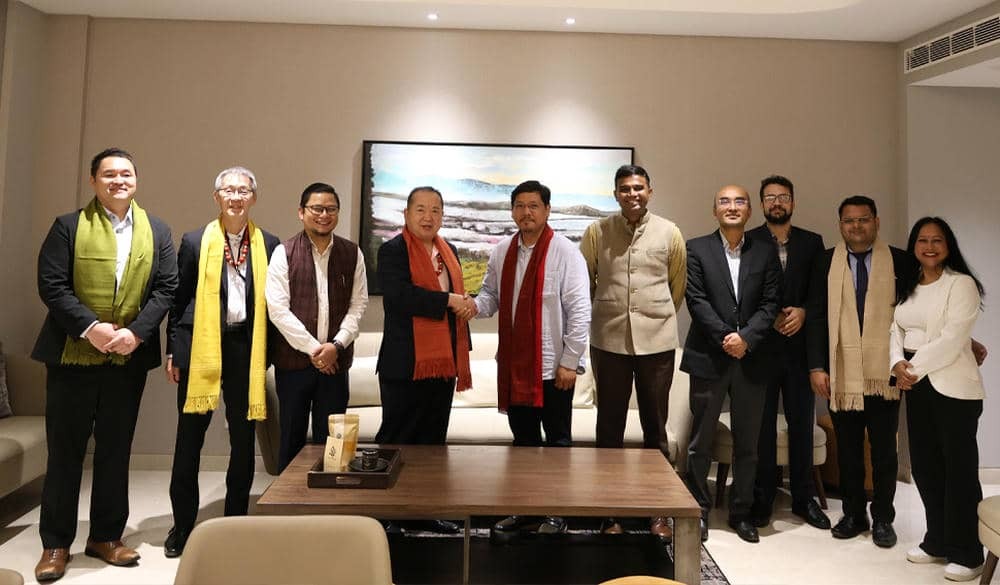
Meghalaya Chief Minister Conrad K. Sangma has described Japan as a key development partner for the state, highlighting expanding collaboration in infrastructure, youth skilling, agriculture, and sustainable livelihoods.
Speaking at the sixth India-Japan Intellectual Conclave ‘Kizuna’ in Shillong, Sangma said ties between India and Japan are rooted in shared democratic values, mutual respect, and a common vision for economic growth and sustainability. He noted that “Kizuna,” meaning a lasting bond, aptly reflects the strength of bilateral relations.
Outlining Meghalaya’s engagement beyond traditional infrastructure projects, the Chief Minister said 47 nurses from the state are currently working in Japan. Following his visit to Japan in April 2025, the state signed a memorandum of understanding with a Japanese firm to train and place 500 youths this year, with a target of scaling up to 5,000 placements over the next five years. A Japanese language center in Shillong is also supporting skill development and overseas employment opportunities in collaboration with Japanese companies.
In agriculture, Meghalaya has partnered with Japan’s YATS Company to establish India’s first commercial shiitake mushroom production facility in Upper Shillong. The unit has the capacity to produce 1.5 lakh inoculated blocks annually and is expected to benefit more than 1,000 farmers. The state is also working with Sasaki Sake Brewery to develop locally produced rice-based sake, blending Japanese expertise with local resources.
The Japan International Cooperation Agency (JICA) has played a significant role in supporting key projects in the state. These include the MegLIFE initiative, which is restoring 22,500 hectares of forest across 500 villages in 11 districts. JICA is also assisting in the renovation of the Umiam and Umiam-Umtru Stage-III hydroelectric stations and backing the construction of a 19-km river bridge linking Dhubri in Assam with Phulwari in Meghalaya.
Emphasizing that nearly 74 percent of Meghalaya’s population is under the age of 35, Sangma proposed the creation of a “Meghalaya-Japan Skill Corridor” to harness the state’s youthful workforce alongside Japanese technological expertise. He also highlighted growing cultural exchanges, including the Japanese pavilion at the Shillong Cherry Blossom Festival, and invited Japanese investors and academic institutions to explore opportunities in climate resilience, circular economy, tourism, and technology.
The conclave was attended by Japan’s Ambassador to India Ono Keiichi, senior officials from India’s Ministry of External Affairs, and representatives of JICA, underlining the growing strategic and developmental partnership between Meghalaya and Japan.
Youth, Infrastructure and Agriculture at Core of Meghalaya-Japan Collaboration