Nagaland Governor Nand Kishore Yadav on September 24 called for the promotion of Hindi alongside efforts to preserve the state’s indigenous languages, saying India’s linguistic diversity is an important part of its cultural strength.
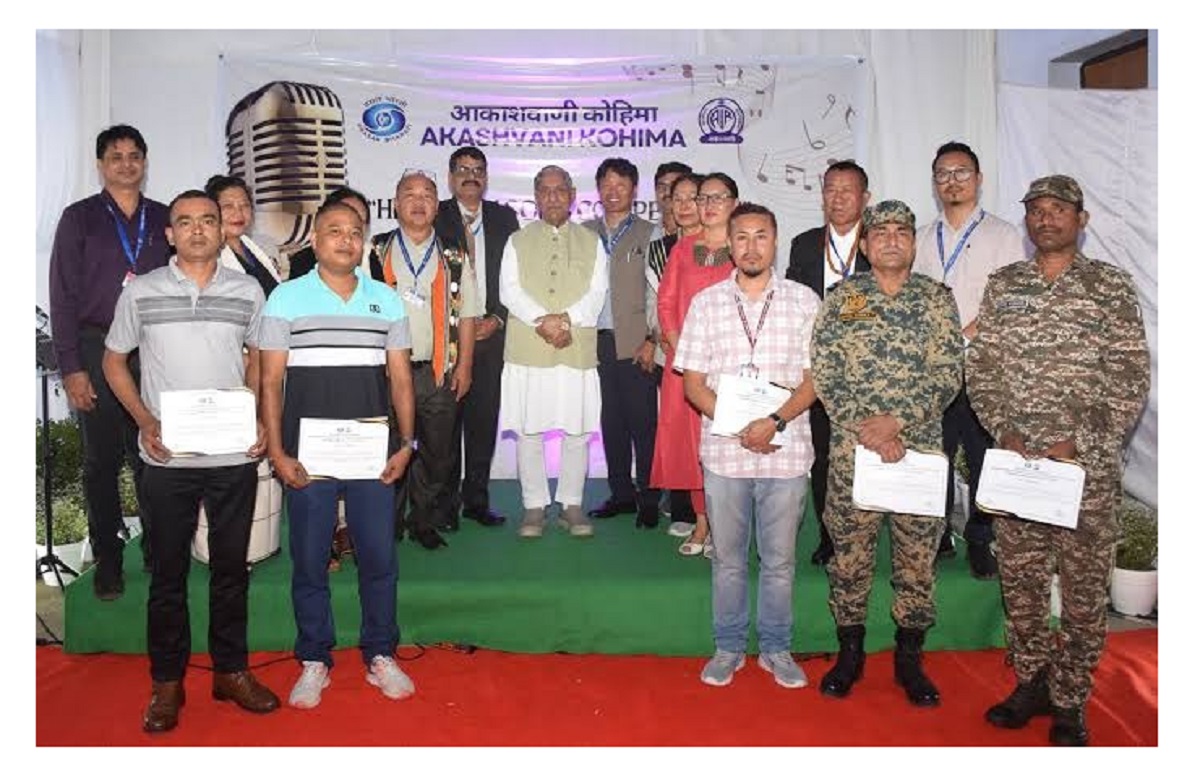
Yadav was speaking at the prize distribution ceremony of the Hindi Film Song Competition organised by Akashvani Kohima as part of Hindi Pakhwada 2026.
The governor said Hindi plays an important role as a medium of communication among people from different linguistic regions of the country. At the same time, he said indigenous languages remain closely linked to the identity, history and cultural heritage of local communities.
He said Nagaland’s diverse tribal communities have their own languages, dialects, traditions and cultural expressions. Each language, he noted, carries the history, traditional knowledge, values, songs and stories of the community that speaks it.
Yadav said the promotion of Hindi should therefore go hand in hand with respect for and preservation of other Indian languages. He called for the spirit of Hindi Pakhwada to extend beyond the fortnight-long observance and encouraged people to learn and use Hindi while continuing to respect indigenous languages and English.
The governor also placed emphasis on the role of young people in preserving the linguistic heritage of the state. He encouraged the younger generation to learn more than one language and said efforts should be made to protect indigenous languages and the traditional knowledge associated with them.
Speaking about the Hindi Film Song Competition, Yadav said music could cross linguistic boundaries and bring people together. Hindi film songs, he said, have become part of the shared cultural memory of several generations of Indians.
The event was organised by Akashvani Kohima as part of Hindi Pakhwada 2026, with the competition providing a platform for participants to engage with Hindi through music.
Yadav also highlighted the role of Akashvani in Nagaland, particularly in providing news, information, education, music, cultural programmes and public messages to people across the state.
He said radio continues to have relevance in a geographically challenging state such as Nagaland, where communication and connectivity can be difficult in several areas.