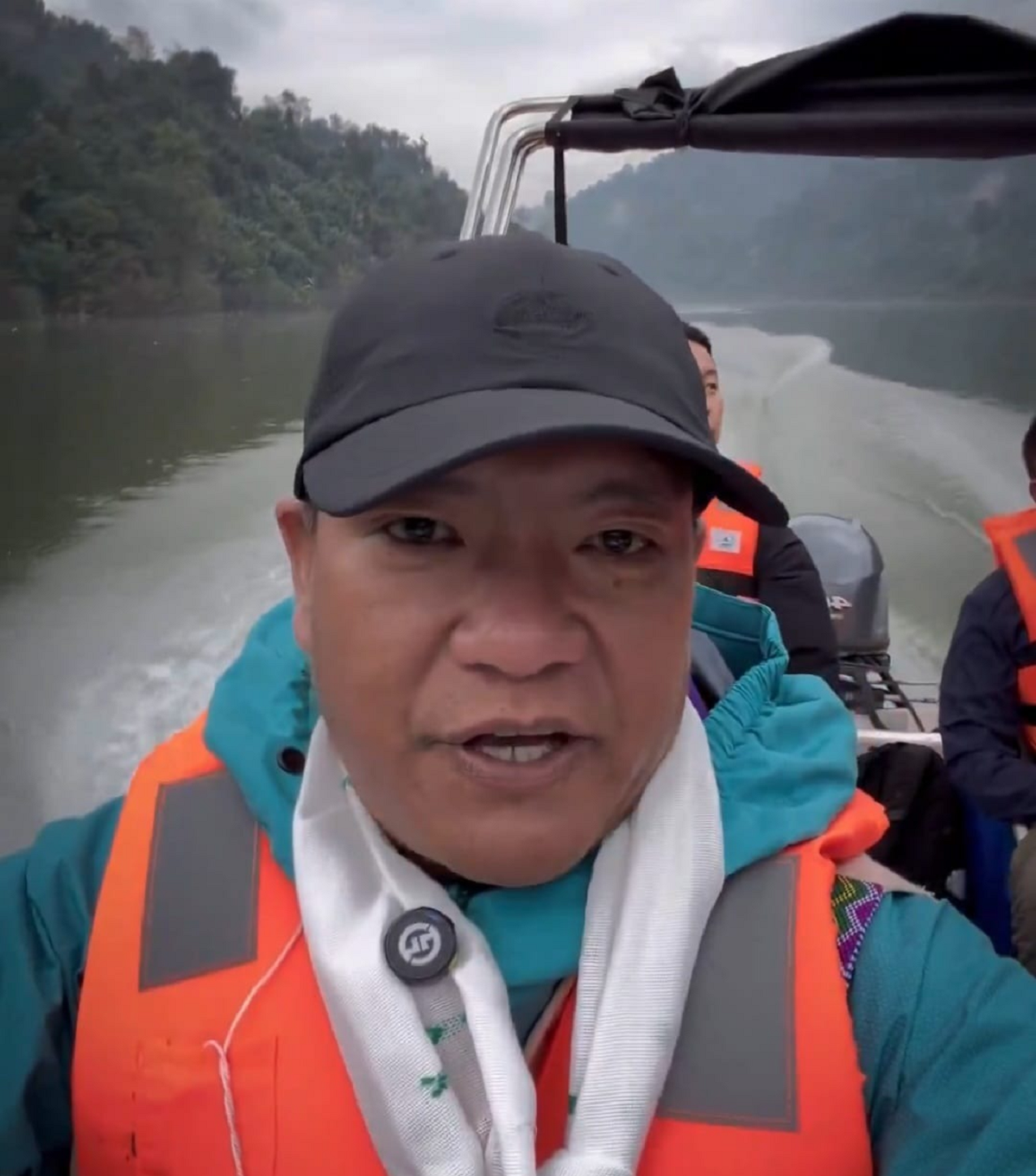
In a landmark moment for Arunachal Pradesh, Chief Minister Pema Khandu, along with his colleagues, undertook a historic high-speed river journey covering approximately 45 kilometers along the Subansiri River from the Subansiri Lower Hydroelectric project site here to the Sibe-Rite confluence, marking a significant milestone in the state’s developmental and tourism trajectory—besides hydropower.
Addressing a gathering comprising Khandu, he described the occasion as “history in the making” for the state. He expressed gratitude to all participants and stakeholders, particularly NHPC, the power developer, who contributed to making the event possible.
“This is a proud moment for Arunachal Pradesh. Though the gathering may be small in number, the significance of this event is immense. Such a journey has never been undertaken before in the state and will be recorded in its history,” he stated.
Referring to the broader vision of development, the chief minister highlighted the roadmap being pursued in alignment with the Government of India’s vision of a “Viksit Bharat” and “Viksit Arunachal Pradesh.”
Emphasizing the state’s immense natural and resource potential, he reiterated the government’s commitment to converting these resources into sustainable revenue through well-defined policies.
The Subansiri Lower Hydroelectric Project, initiated in 2001, was cited as a prime example of this vision. Despite initial setbacks due to protests, the project has regained momentum in recent years. Officials stated that a significant portion of the machinery is already operational, and by December 2026, the project is expected to generate 2,000 MW of power, making it the largest hydroelectric project in the country. Additionally, hydropower projects with a combined capacity of nearly 19,000 – 20,000 MW are under various stages of development in the state.
Khandu expressed appreciation to the people of districts including Kamle, Lower Siang, and Upper Subansiri for their support and acceptance of such large-scale investments.
He noted that the Subansiri project features the longest reservoir stretch (pondage) in the country, extending nearly 45 kilometers, a record that may only be surpassed by the proposed Upper Siang Multipurpose Project in the future.
Highlighting the immense tourism potential of the region, he described the natural beauty of Arunachal Pradesh as unparalleled.
“The pristine rivers, dense forests, and rich biodiversity make this region unique not only in India but across the world. Our tribal communities have lived in harmony with nature for centuries, and it is our responsibility to preserve this heritage even as we pursue development,” he said.
He underscored that hydropower is among the cleanest forms of energy and plays a crucial role in ensuring energy security, especially in the context of global uncertainties affecting conventional energy resources.
The government, he announced, will undertake a comprehensive survey of the region and develop a master plan for sustainable tourism development. This will include stakeholder consultations, especially with local communities, while respecting existing land classifications such as community land, reserve forests, and other designated areas.
The proposed development vision includes eco-friendly tourism infrastructure, luxury resorts, water sports, and potential avenues for high-end recreational activities.
Drawing parallels with established tourist destinations, Khandu noted that such initiatives could significantly boost revenue generation and create local employment opportunities.
He said that to promote the region, the government also plans to introduce high-speed yachts and enhance accessibility for tourists, filmmakers, and investors. The scenic landscape is expected to attract filmmakers and content creators, further showcasing Arunachal Pradesh on national and global platforms.
Khandu commended the Hydro Power Department for successfully organizing the event, with special acknowledgment of the efforts of senior officials and the administrative team.
Calling upon all stakeholders to work collectively, he emphasized that the development process must be undertaken with sincerity, proper planning, and community participation.