In a significant boost to primate conservation efforts in Northeast India, forest personnel from Assam, Meghalaya and Tripura participated in a week-long residential training programme focused on the conservation of the endangered Western Hoolock Gibbon (Hoolock hoolock), India’s only ape.
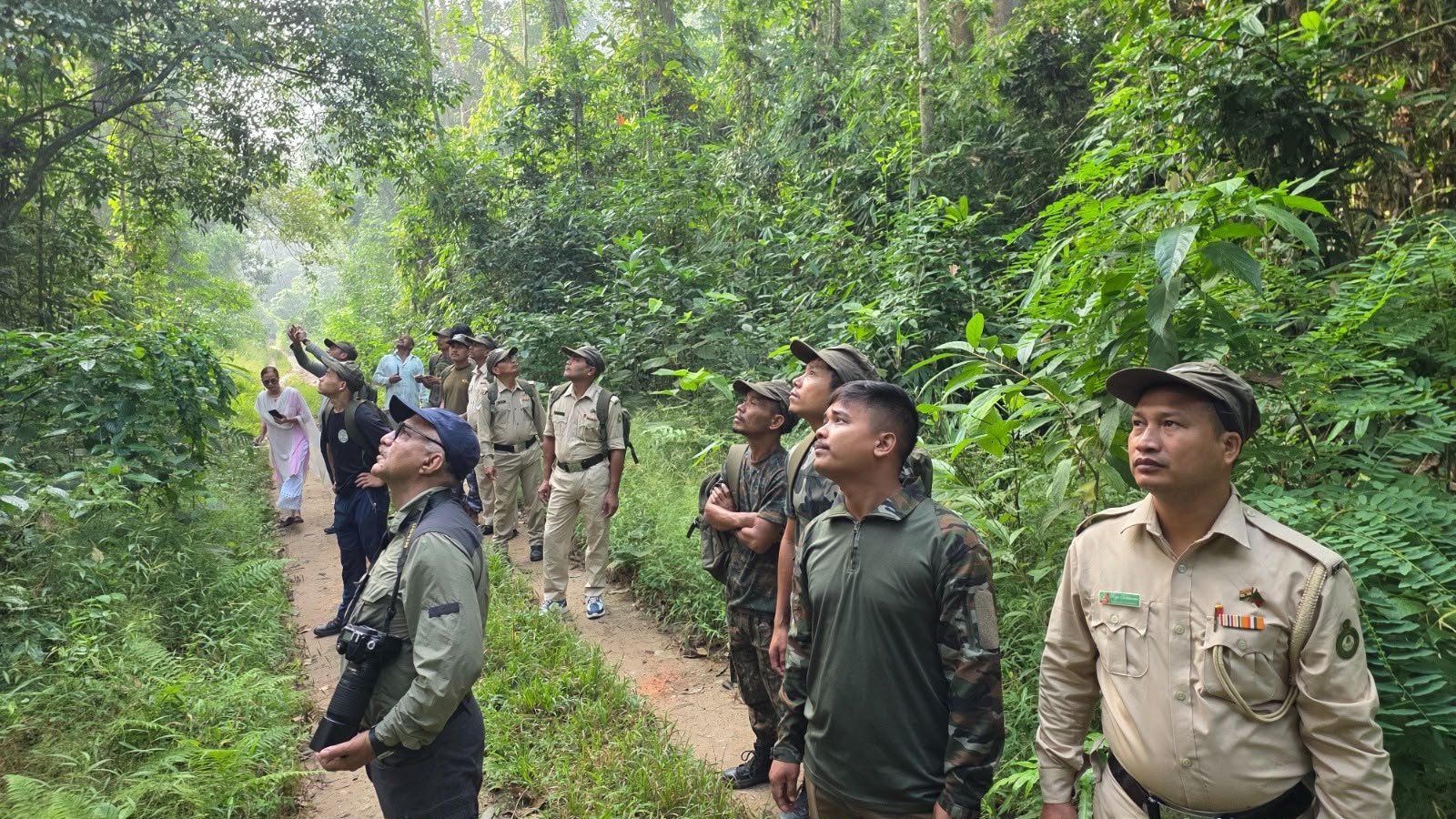
The training programme, organised by Aaranyak at the Hollongapar Gibbon Sanctuary in Assam from October 24 to 30, brought together 16 forest guards from the three states. The initiative aimed to strengthen their knowledge and field-level capacities for protecting Hoolock gibbons and their habitats.
The Western Hoolock Gibbon, which inhabits parts of Northeast India, faces increasing threats from habitat fragmentation, forest degradation and hunting. Conservation efforts are often hampered by limited species-specific knowledge, inadequate awareness and restricted access to scientific conservation techniques among frontline forest staff. Recognising the crucial role played by forest guards, Aaranyak designed the programme to equip them with the necessary skills and knowledge to become effective conservation practitioners.
The training was organised by Aaranyak, a Scientific and Industrial Research Organisation, in collaboration with the Assam Forest Department, particularly the Jorhat Forest Division. The programme received support from The Habitat Trust, the IUCN Primate Specialist Group and the IUCN Section on Small Apes.
Participants received training on a wide range of subjects, including biodiversity conservation in Northeast India, primate conservation with special emphasis on Hoolock gibbons, census and population estimation techniques, habitat assessment and restoration, field data collection and reporting, wildlife monitoring, rescue and rehabilitation procedures, GPS applications in field research, and wildlife laws and their practical implementation.
Combining classroom sessions with hands-on field exercises, the programme provided participants with both theoretical understanding and practical experience in modern conservation methods essential for protecting Hoolock gibbon populations.
The programme was inaugurated by Range Officer Rupak Bhuyan, who welcomed forest guards from the three states. He described the initiative as one of the first specialised training programmes of its kind in Northeast India, offering opportunities beyond conventional forestry training. He expressed confidence that it would enhance the participants’ ability to contribute meaningfully to biodiversity conservation.
Welcoming the participants, Dr. Dilip Chetry, Director and Head of Aaranyak’s Primate Research and Conservation Division and Vice Chair of the IUCN Primate Specialist Group-South Asia, stressed the urgent need for collective efforts to conserve Hoolock gibbons. He expressed concern over the declining status of the species and called for support from all sections of society to ensure its long-term survival.
Training sessions were conducted by a distinguished panel of experts, including former Assam Agricultural University professor Dr. I.C. Baruah, Assam Forest Department DCF Gunin Saikia, Guwahati High Court advocate Ajoy Kumar Das, Wildlife Trust of India scientist Dr. Bhaskar Choudhury, Nakachari College’s Dr. Kumud Ghosh and several resource persons from conservation organisations, including Aaranyak.
The programme concluded on October 30 with a convocation ceremony chaired by Dr. Chetry, who highlighted the importance of bringing together forest personnel from Assam, Meghalaya and Tripura on a common platform for conservation. He thanked the forest departments of the three states, the Jorhat Forest Division and local communities for their support and encouraged participants to apply their newly acquired knowledge in the field.
The concluding ceremony was attended by Gitumani Das, AFS, Range Officer of the Mariani Forest Range, as the chief guest. He urged the trainees to become conservation ambassadors and spread awareness about the importance of protecting Hoolock gibbons and biodiversity across the region.
Participants received training manuals, books on Hoolock gibbons, awareness materials, certificates and other educational resources at the end of the programme.
By bringing together frontline forest personnel from three northeastern states, the initiative marked an important step towards strengthening regional cooperation, enhancing scientific understanding and building a skilled conservation workforce dedicated to safeguarding India’s only ape.