The naming and renaming of several roads after Bharatiya Jana Sangh founder Dr Syama Prasad Mookerjee has triggered political and public debate in Assam and Arunachal Pradesh, with Opposition parties, student organisations and local residents questioning the decisions and calling for greater recognition of regional history and local heroes.
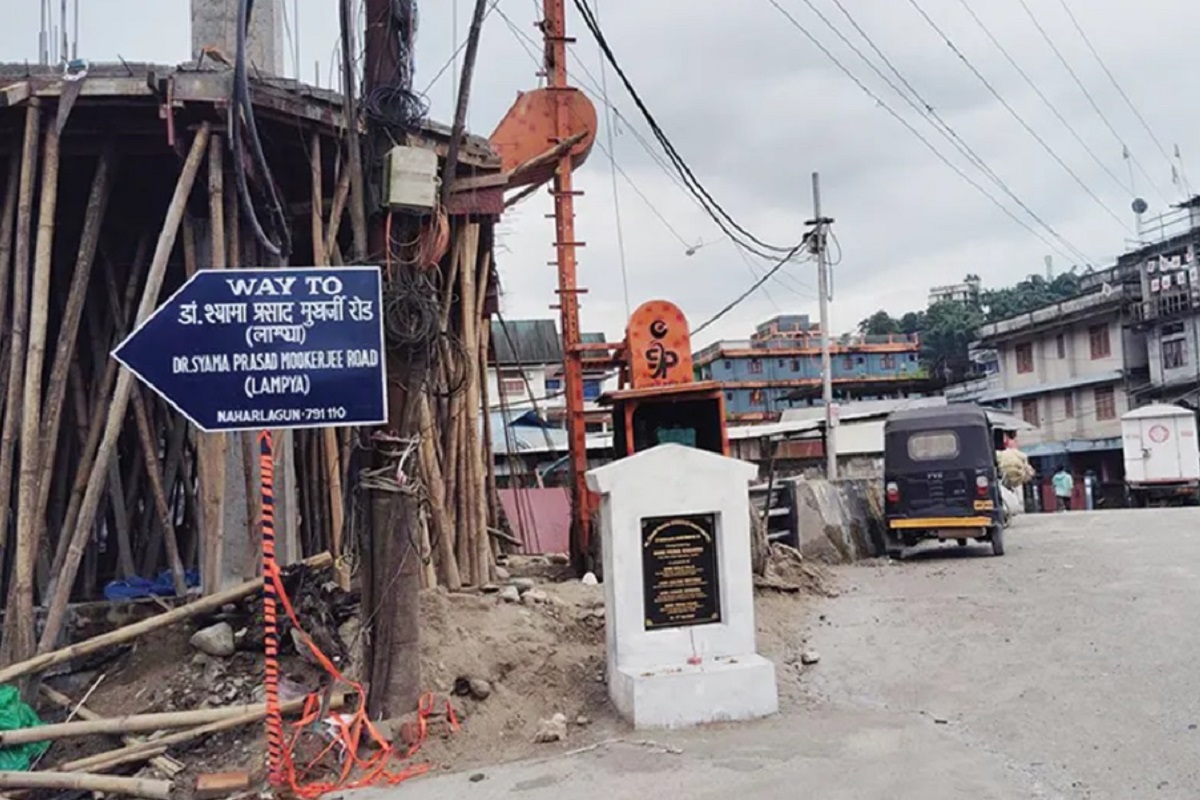
In Arunachal Pradesh, the controversy erupted after the newly constructed 4-km road connecting Damsite and Model Village in Itanagar was inaugurated by Chief Minister Pema Khandu on July 6 as Dr Syama Prasad Mookerjee Road. The road was traditionally known as Kangkra Putu, and many local residents claimed they were not consulted before the name was changed.
The Indian Youth Congress criticised the decision, arguing that Dr Mookerjee had no direct association with Arunachal Pradesh and that roads in the state should instead honour local personalities who contributed to its development. Residents also questioned why the traditional name had been replaced, saying there were numerous Arunachali leaders deserving of such recognition.
Defending the decision, Itanagar Municipal Corporation Mayor Likha Nari Tadar said Dr Mookerjee’s contribution to India’s freedom movement and post-Independence politics justified the honour. He also noted that Mookerjee founded the Bharatiya Jana Sangh in 1951, the political predecessor of the Bharatiya Janata Party (BJP).
A similar controversy has unfolded in Assam following the renaming of Swahid Ratan Kachari Road in Dhekiajuli as Dr Syama Prasad Mookerjee Road.
The road, connecting National Highway-15 to Batashipur, had been dedicated in 2017 to Swahid Ratan Kachari, who was martyred during the 1942 Quit India Movement. The decision has been opposed by organisations including the All Bodo Students’ Union (ABSU) and the All Assam Tribal Students’ Association (AATSA), which argue that replacing the name of a local freedom fighter undermines Assam’s historical legacy.
ABSU said while national leaders deserve recognition, it should not come at the cost of erasing the memory of regional martyrs whose sacrifices remain closely linked to the identity of Dhekiajuli, often referred to as “Swahid Nagari.” The organisation has warned of intensified democratic protests if the original name is not restored.
Senior Assam Pradesh Congress Committee (APCC) leader Debabrata Saikia has also written to Chief Minister Himanta Biswa Sarma, urging the government to reverse the decision. In his letter, Saikia described the renaming as “arbitrary, insensitive and politically motivated,” alleging that it dishonours the martyrs of the Quit India Movement and hurts public sentiment.
Meanwhile, the Koch Rajbanshi Citizens Forum has protested the government’s decision to rename a prominent market road in Golakganj after Dr Mookerjee. The organisation contends that the move overlooks the history and identity of the Koch-Rajbongshi community and ignores the contribution of the historic Prodhani Zamindar family, which had donated land for the area’s development.
The forum has demanded that the government revoke the decision and instead name public infrastructure after local personalities whose contributions are directly connected to the region’s history and cultural heritage.
The controversies have reignited a wider debate over whether public infrastructure should prioritise national figures or preserve local historical identities, with critics arguing that such decisions should be taken only after broader public consultation.