In a significant development for India’s botanical research, the rare epiphytic shrub Agapetes wardii has been documented for the first time in Arunachal Pradesh, specifically in the Changlang district. Previously, the species was known to exist only in Myanmar, making this discovery an important addition to India’s flora. Welcoming the breakthrough, Arunachal Pradesh Deputy Chief Minister Chowna Mein described it as a remarkable scientific achievement that highlights the ecological richness of the state. He noted that the finding further strengthens Arunachal Pradesh’s position as one of India’s प्रमुख biodiversity hotspots, particularly within the Eastern Himalayan region.
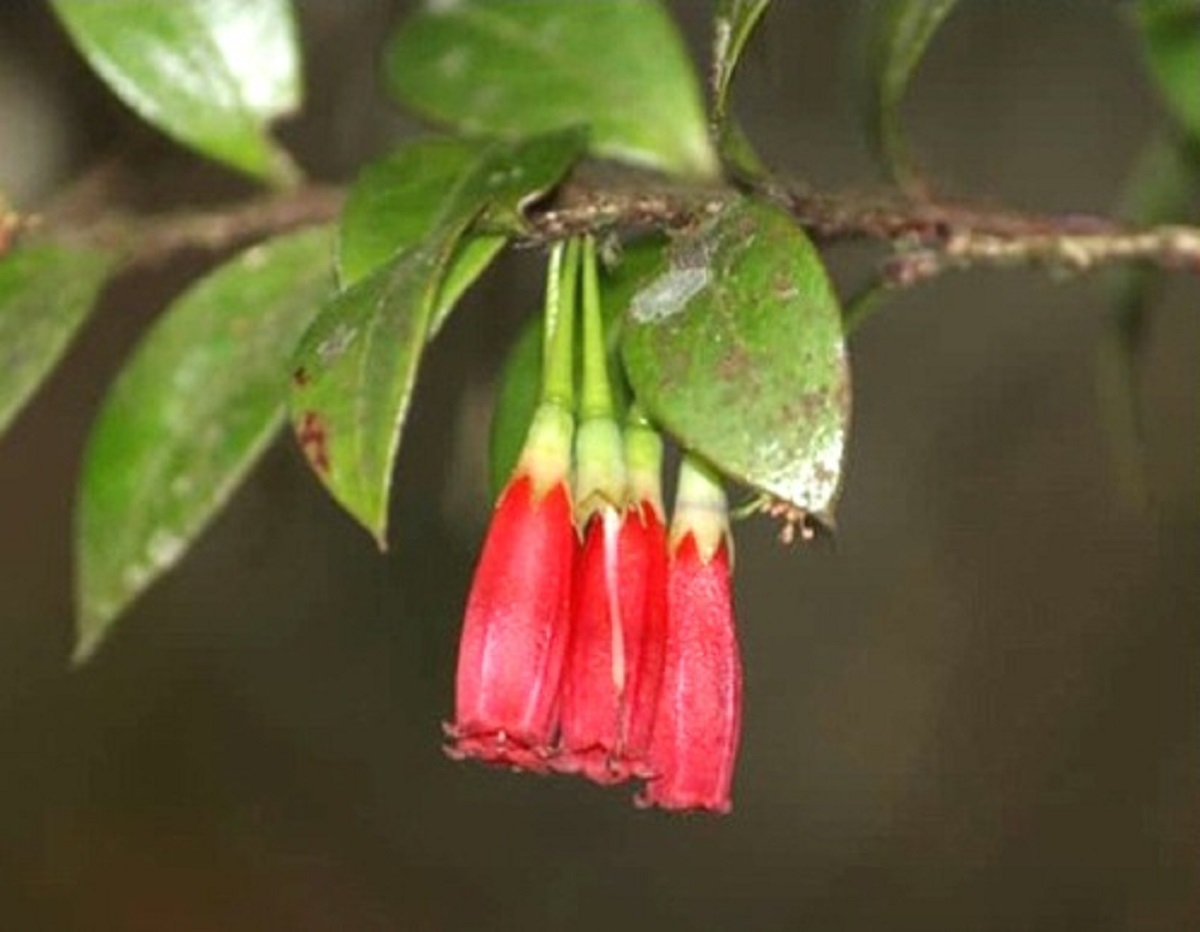
Agapetes wardii is an epiphytic shrub that typically grows on other plants in moist evergreen forests, often near water sources. It is known for its distinctive tubular flowers that range in color from red to pinkish hues, and occasionally white, along with elliptic to lanceolate leaves. The identification of the species was confirmed through detailed morphological and taxonomic analysis, comparing it with closely related species such as Agapetes hosseana, A. mannii, and A. buxifolia.
The discovery was made by researchers associated with the Society for Education and Environmental Development (SEED), whose work in biodiversity documentation has been widely appreciated. Chowna Mein commended the research team for their dedication and scientific contribution, stating that such efforts are crucial for expanding knowledge about India’s natural heritage. He also emphasized that the dense and relatively unexplored forests of Arunachal Pradesh continue to offer vast opportunities for scientific exploration, often revealing species not previously recorded in the country. Experts believe that continued field studies and conservation efforts in the Eastern Himalayas will not only lead to more such discoveries but also help preserve fragile ecosystems that are home to rare and endemic species.