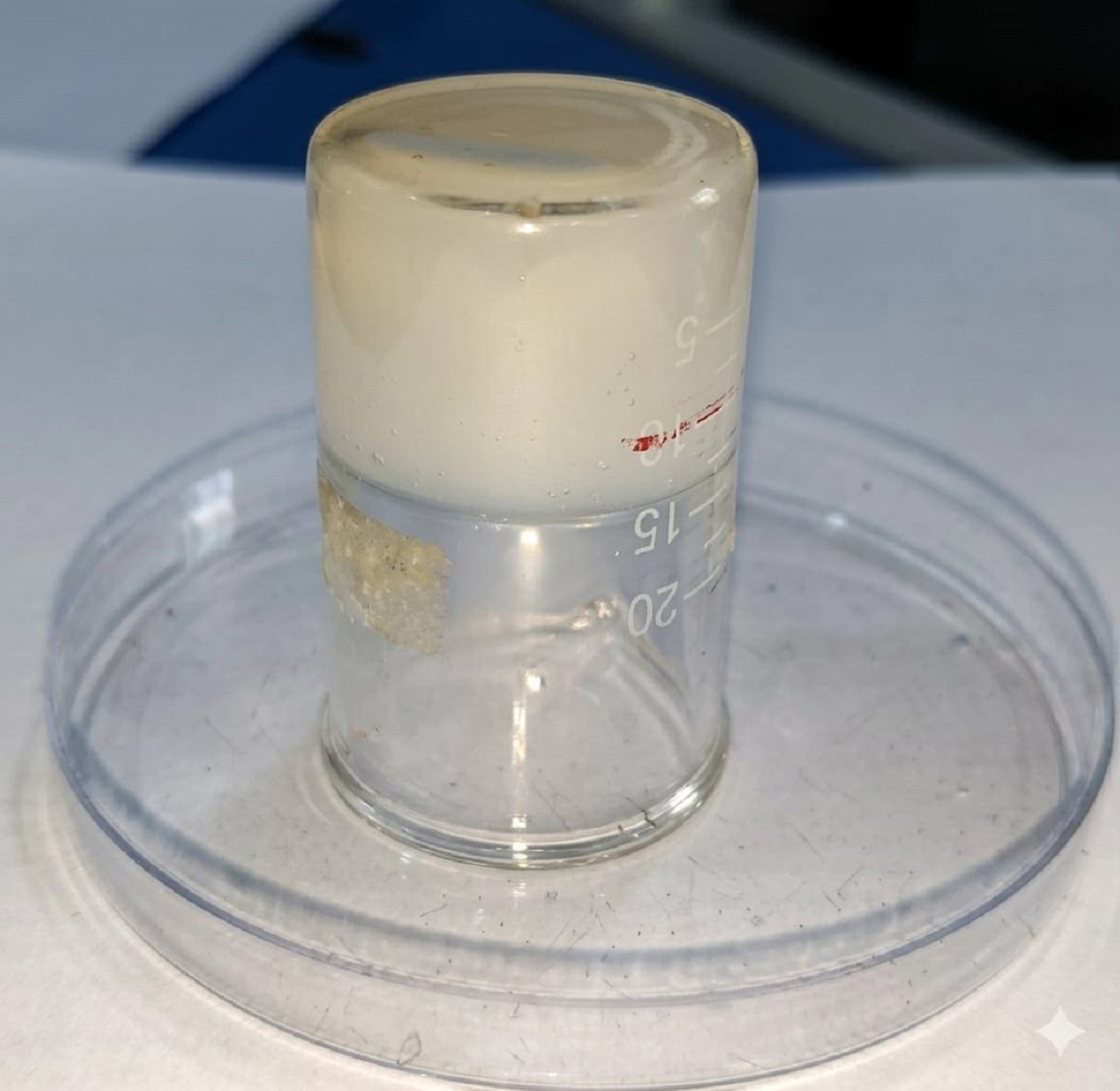
Nagaland University researchers have engineered a sustainable hydrogel membrane electrolyte utilizing the natural biopolymer chitosan, presenting an eco-friendly alternative to conventional liquid electrolytes for supercapacitors. This innovative quasi-solid hydrogel, which employs potassium oxalate as an ionic crosslinker, establishes a robust three-dimensional network that enhances ion transport efficiency. The prototype supercapacitor developed showcased its practical application by powering a red LED indicator, affirming the technology’s viability for advanced energy storage systems.
Supercapacitors are essential for fast charging and discharging, serving vital roles in renewable energy systems, electric vehicles, and portable electronics. Traditional liquid electrolytes, despite their widespread use, suffer from issues like leakage, volatility, and significant safety concerns. The chitosan-based hydrogel addresses these challenges by combining the high ionic conductivity characteristics of liquids with the mechanical strength of solids, optimizing performance in electrical double-layer capacitors (EDLCs).
Published in the International Journal of Biological Macromolecules, the research was coordinated by scholars Dipankar Hazarika, Nuphizo Shijoh, and Marjo A. Kichu, under the guidance of Dr. Nurul Alam Choudhury. Prof. Jagadish K. Patnaik, Vice Chancellor of Nagaland University, highlighted this accomplishment as a pivotal development in sustainable energy research, emphasizing the hydrogel’s superior safety, durability, and efficiency compared to conventional methods.
The supercapacitor demonstrated impressive longevity, sustaining effective performance through 46,000 charge-discharge cycles, thus indicating its suitability for long-lasting energy storage solutions. Dr. Choudhury commented on the hydrogel’s ability to facilitate efficient ion movement and stable energy retention, showcasing its capacity for future supercapacitor innovations.
According to Hazarika, the technology has now reached a Technology Readiness Level (TRL-3), indicating successful laboratory demonstrations and leading to the establishment of a startup initiative focused on hydrogel electrolyte commercialization. Co-researcher Nuphizo Shijoh noted the potential impact of this technology in developing safer, high-performance, and environmentally sustainable energy storage systems, crucial for integrating renewable energy, electric mobility, and advanced electronic devices.
Looking ahead, the research aims to scale the production of the hydrogel membrane electrolytes, incorporate them into commercial supercapacitor modules, and evaluate performance under practical conditions. Future explorations will also target the development of flexible and wearable energy storage devices derived from this innovative technology.