The capital city of Sikkim, Gangtok, was painted in the colors of empowerment on April 17, as thousands of women converged for a massive rally in support of the Women’s Reservation Act. The historic procession, which saw participation from every corner of the state, served as both a celebration of the landmark legislation and a collective demand for a more inclusive political landscape in India.
The march commenced at the Tata Stand in Deorali, snaking through the heart of the capital. Participants traversed key landmarks, including Pani House, Metro Point, and Hospital Dara, before finally culminating at the iconic Paljor Stadium. Waving the national flag and chanting slogans of progress and gratitude, the rally transformed the streets of Gangtok into a vibrant sea of white and saffron, reflecting a unified front for gender equality in governance.
According to the organizers, the turnout was unprecedented, with nearly 25,000 women arriving from all six districts of Sikkim. The crowd represented a diverse cross-section of society, including members of civil society organizations, government employees, students, and political activists. This cross-demographic participation underscored the deep-rooted desire among the women of the Himalayas to see their voices amplified in the Lok Sabha and state assemblies through the 33 percent reservation quota.
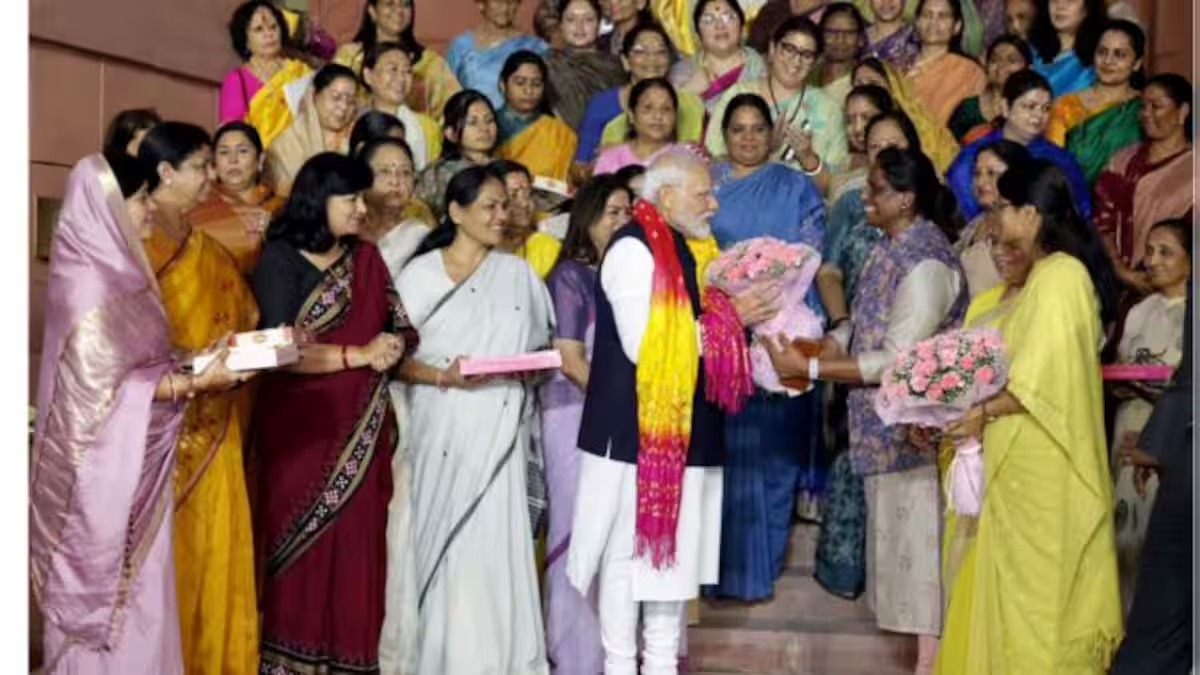
Kala Rai, the SKM MLA from Upper Burtuk and one of the primary organizers of the event, addressed the gathering at Paljor Stadium. She described the implementation of the Act as a moment of immense national pride. Rai emphasized that the rally was a medium for the women of Sikkim to express their heartfelt gratitude toward Prime Minister Narendra Modi for fulfilling a demand that had been languishing for decades. She noted that this legislation is not just a policy shift but a transformative step toward true “Nari Shakti” (Women’s Power).
As the rally concluded with a sense of triumph, the message from the hills was clear: the women of Sikkim are ready to take their rightful place in the hallowed halls of Parliament. By turning out in such staggering numbers, they have demonstrated that the Women’s Reservation Act is more than just a legal provision—it is a beacon of hope for a more balanced and representative democracy. With the implementation of this Act, the political future of Sikkim, and indeed all of India, looks set for a monumental shift toward gender parity.