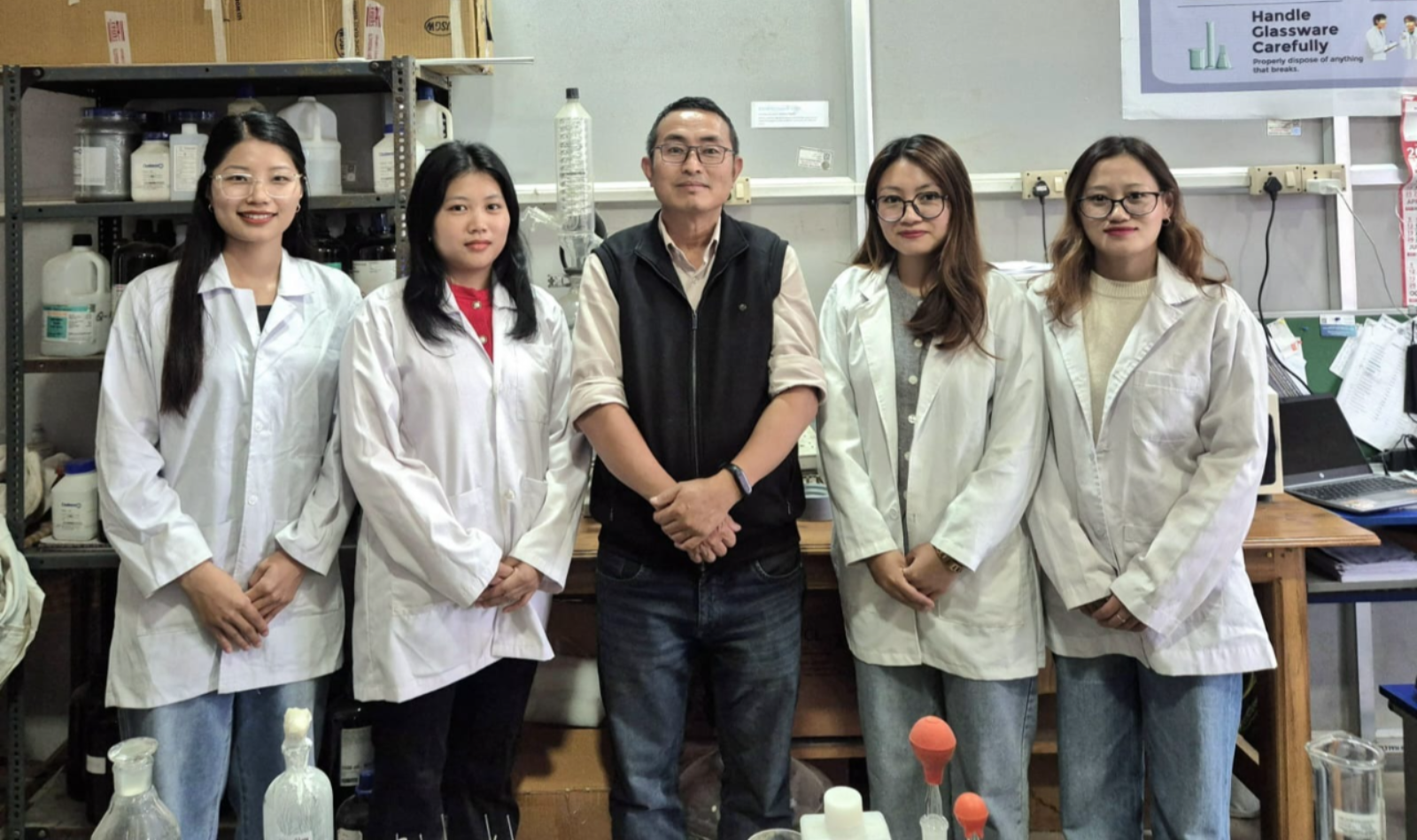
Researchers from Nagaland University and Fazl Ali College, Mokokchung, have transformed one of the State’s most problematic invasive weeds into a powerful tool for next-generation healthcare and sustainable manufacturing, unlocking major end-use applications in pharmaceuticals, medicine and green industry. For a long time, Mikania micrantha has caused ecological problems in Nagaland. Without using the hazardous chemicals typically used in nanomaterial synthesis, the research team has created an environmentally friendly way to transform the invasive plant Mikania micrantha into silver nanoparticles that can effectively speed up drug production, fight dangerous bacteria, and exhibit promising anticancer activity. The researchers used a “green chemistry” approach, which substitutes plant-based science for dangerous industrial procedures. Using leaf extracts, the team created highly stable silver nanoparticles that act as ultra-fast catalysts that can produce essential drug components known as ‘Imidazole’s’ in 30 to 180 seconds. These compounds are foundational to a wide range of medicines used across therapeutic areas.
The research was supported by Anusandhan National Research Foundation (ANRF) and the National Fellowship for Scheduled Tribe Students (NFSTMOTA). The findings have been published in the Biochemical and Biophysical Research Communications, a peer-reviewed scientific journal that disseminates short reports of significant findings across the fields of biochemistry, biophysics and molecular biology. The paper was co-authored by Manthae C. Phom, Phitovili Sumi, Betokali K. Zhimomi, Khonzani Yanthan, Tonge W W, Shokip Tumtin and Tovishe Phucho.
Commending the Nagaland University-led research team for their groundbreaking work, Prof. Jagadish K. Patnaik, Vice Chancellor, Nagaland University, said, “This innovative study highlights a fast, eco-friendly approach to drug synthesis while demonstrating significant antibacterial and anticancer potential. Such research underscores the university’s commitment to scientific excellence and sustainable solutions to address global health challenges.” The study’s most immediate impact lies in pharmaceutical manufacturing. The nanoparticles function as reusable catalytic engines, enabling faster, cleaner, and more cost-effective production of key drug ingredients.
Unlike conventional methods that depend on expensive and toxic reagents, this approach offers a scalable and sustainable alternative for industry. Importantly, the nanoparticles can be reused at least six times with minimal loss of efficiency, significantly reducing production costs and chemical waste an advantage with strong implications for large-scale drug manufacturing. Elaborating on the important outcomes of this research, Dr. I. Tovishe Phucho, Associate Professor, Department of Chemistry, Nagaland University, said that there is still a huge potential for many more locally available plants to show such promising properties and with proper funding, further research is possible. Beyond their productions, these nanoparticles demonstrated strong antibacterial activity against dangerous pathogens, including Staphylococcus aureus (a major cause of hospital infections) and Yersinia pestis. This opens up potential applications in antimicrobial coatings, wound care products, and infection control systems.