The opening day of the National Senior Athletics Federation Competition on Friday witnessed an extraordinary spectacle of speed, stamina, and administrative evolution. As athletes gathered for the ultimate showdown, the track and field arenas became hotbeds of intense rivalry, headlined by a breathtaking, minutes-apart double-shattering of the men’s 100m National Record (NR). Beyond the track, the event marked a historic milestone for Indian sports governance with the debut of mandatory biological testing.
The 100m Blitz: Minutes of Madness on the Track
The men’s 100m sprint transformed into a high-octane thriller during the semifinal heats. The drama unfolded in two distinct acts:
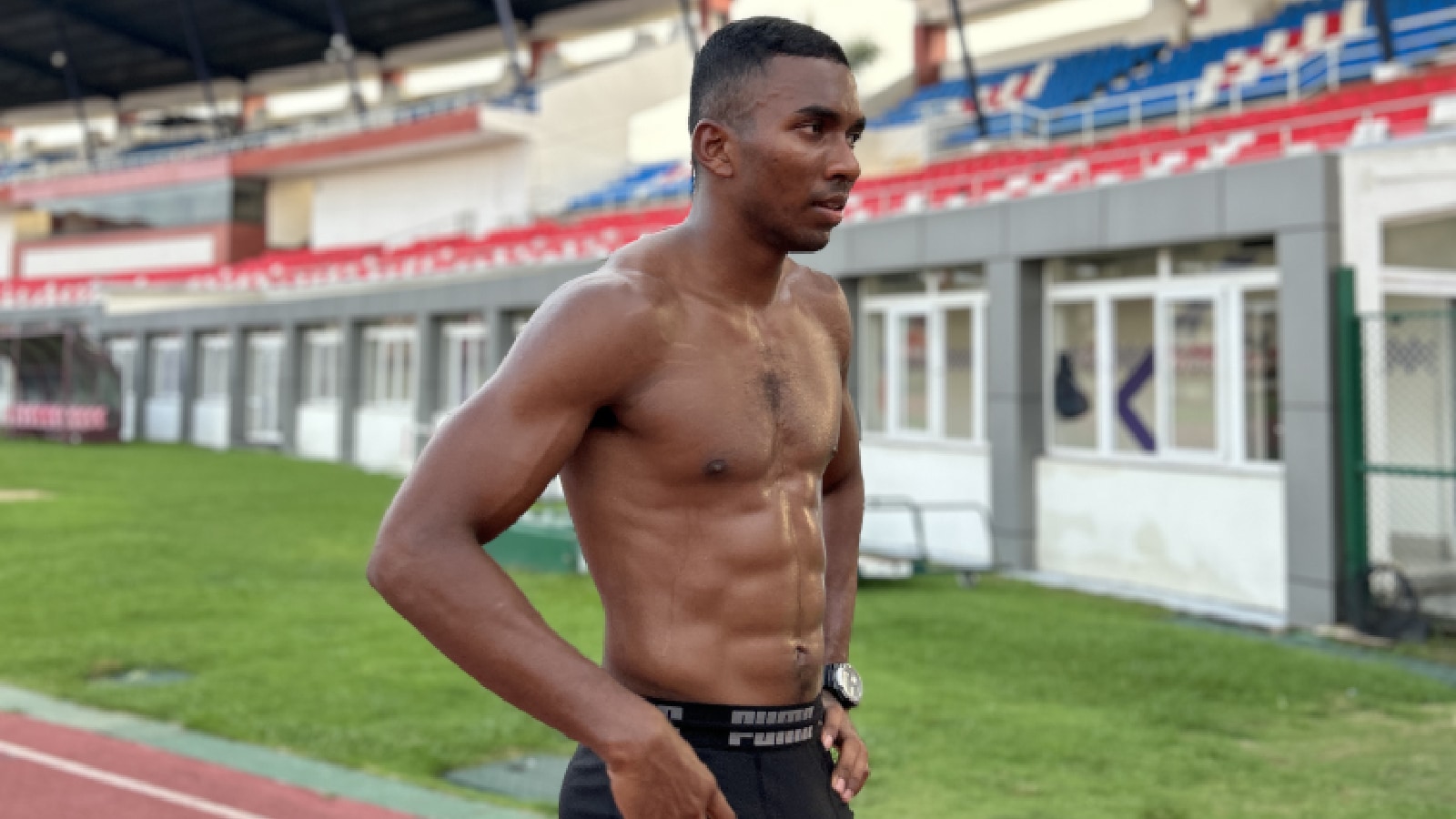
- Act I (The Upset): Gurindervir Singh of Reliance lit the track on fire in the first semifinal heat. He clocking an astonishing 10.17 seconds, effectively obliterating the 10-month-old national record of 10.18 seconds previously held by Odisha’s Animesh Kujur.
- Act II (The Retaliation): Gurindervir’s historic moment was incredibly short-lived. Just minutes later, a determined Animesh Kujur stepped onto the blocks for the second semifinal heat. In a roaring response, Kujur clocked a phenomenal 10.15 seconds, reclaiming his crown and setting the new National Record.
With this blistering time, Kujur also comfortably breached the 10.16-second qualification standard set by the Athletics Federation of India (AFI) for the 2026 Commonwealth Games. “It’s all about hard work,” a jubilant and visibly ecstatic Animesh stated after safely securing his record back.
The epic rivalry is far from over, as both Gurindervir and Animesh are locked for a massive blockbusting showdown in the finals on Saturday.
Heavyweight Battle in the Sand pit: Ancy Edges Out Shaili
The high drama was not restricted to the tracks. The women’s long jump arena witnessed a fierce, neck-and-neck battle between India’s premier long jumpers, Shaili Singh and Ancy Sojan.
Ultimately, it was Ancy’s day to shine. Representing the Indian Navy, Ancy displayed incredible consistency throughout her series, registering jumps of 6.47m, 6.56m, 6.69m, 6.75m, 6.68m, and 6.57m. Her peak jump of 6.75m secured her the gold medal and shattered the previous meet record of 6.64m, which Shaili had established last year in Kochi.
Shaili Singh, representing the Anju Bobby George Sports Foundation, fought valiantly but had to settle for second place with a top jump of 6.58m.
Endurance Beats the Heat: The 10,000m Grinds
In the long-distance events, athletes battled both the distance and grueling weather conditions: - Men’s 10,000m: In the morning session, Uttarakhand’s Deepak Bhatt clinched the top spot with what was described as a mediocre time of 29 minutes and 42.93 seconds. The intense heat took a heavy toll on the athletes; Karnataka’s Shivaji M suffered severe dehydration during the grueling race and required immediate medical assistance from team coaches.
- Women’s 10,000m: Maharashtra’s Ravina Gayakwad dominated the field to win the women’s category with a timing of 35:30.98. Despite her gold-winning effort, she finished far below the 2026 Commonwealth Games qualification benchmark of 31:14.14.
A New Era: AFI Introduces SRY Gene and DNA Testing
This competition will go down in history as a watershed moment for Indian sports science. For the very first time at the national level, the AFI has introduced mandatory SRY Gene Testing for female athletes.
Conducted via blood tests or cheek swabs, this mandatory, once-in-a-lifetime test aims to conclusively ensure that only biological females compete in the women’s categories. Alongside this, the federation is launching DNA testing for Indian athletes. This initiative is designed to archive genetic data to aid future sports research, optimize athletic development, and implement injury prevention strategies. The AFI has explicitly stated that all test results will remain strictly confidential.
Bigger Stakes: Road to Glasgow and China
Beyond the immediate medals, this three-day meet (May 22-25) carries massive international implications. It serves as the definitive final selection trial for the 2026 Commonwealth Games scheduled to take place in Glasgow from July 23 to August 2. Furthermore, the performances here will decide the Indian contingent for the inaugural Asian U23 Championships, which will be hosted in China from July 9 to 12.