The Idu Mishmi Cultural and Literary Society (IMCLS) has blacklisted four researchers associated with the National Centre for Biological Sciences (NCBS), Indian Foundation for Butterflies Trust (IFBT) and Ashoka Trust for Research in Ecology and the Environment (ATREE), alleging violations of the Idu Mishmi Community Research Code of Ethics (IMCRE).
The researchers named by the society are Dr Krushnamegh Kunte of NCBS, Fahim Khan of IFBT, Rajkamal Goswami of ATREE and Aavika Danda, formerly associated with ATREE. According to the IMCLS, the four will not be permitted to undertake research activities in Idu Mishmi-inhabited areas in the future.
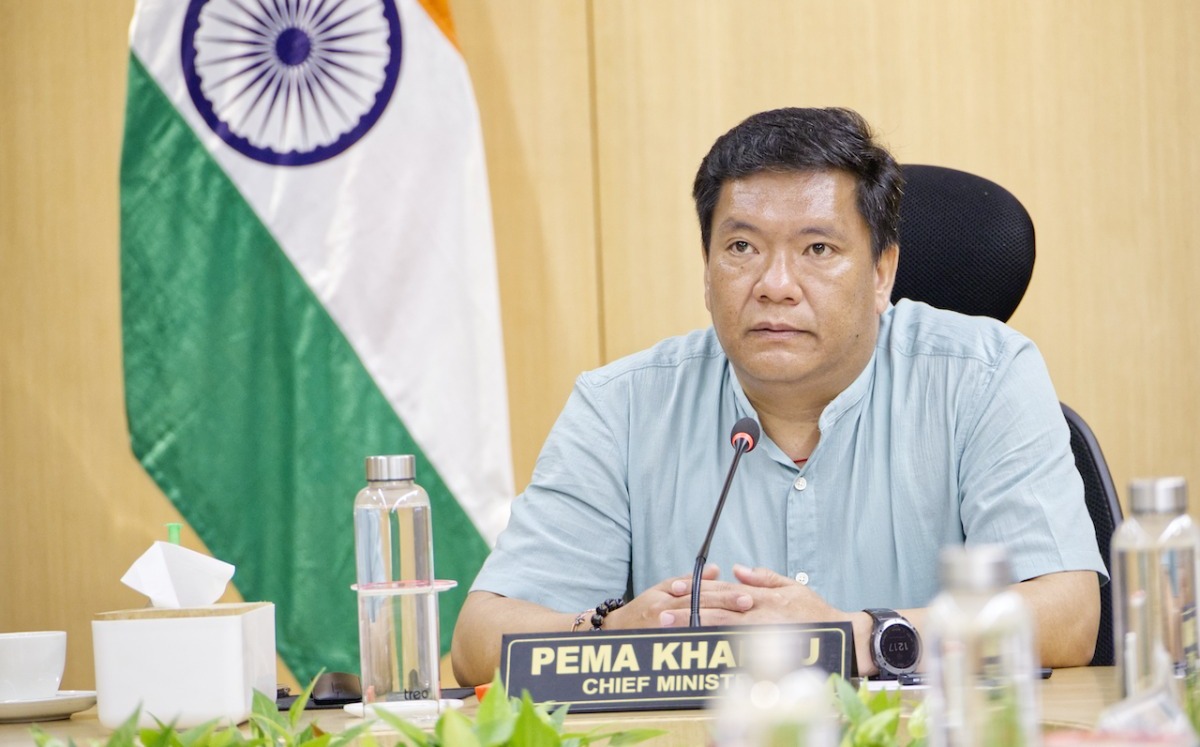
The Idu Mishmi community has its own research ethics framework, the IMCRE, which was framed in 2024 and launched by Arunachal Pradesh Chief Minister Pema Khandu. Under the framework, a Research Ethics Review Board (RERB) has been constituted to examine research proposals and grant permission for research activities in Idu Mishmi-inhabited areas.
The IMCLS said the purpose of the framework is not to prevent scientific research but to ensure that research involving the indigenous community follows principles such as free, prior and informed consent (FPIC), responsible data management, ethical research practices, and greater community participation.
The society said the framework also seeks to discourage what it described as “parachute research” and promote research methodologies that recognise indigenous knowledge systems and community rights.
According to the IMCLS, members associated with ATREE had conducted work in the Mekola Community Conserved Area (CCA) without obtaining prior approval from the society or the required consent from the RERB.
The society alleged that the research activities included the use of camera traps and the collection and sharing of community-related data with the Forest Department, as well as placing such information in the wider public domain without appropriate community consent.
The IMCLS further alleged that these activities contributed to complications concerning land-related matters in the Hunli-Desali circle. The society claimed that the researchers did not have a complete understanding of the legal and customary issues surrounding the matter.
The allegations were specifically directed at Rajkamal Goswami and Aavika Danda. The IMCLS alleged that the activities were carried out without prior informed consent and said the researchers appeared to have proceeded with the work without adequately following the community’s research ethics requirements.
The society also said Danda had been called in writing for a meeting with the IMCLS but did not attend. According to the organisation, she subsequently left ATREE after completing the research work, including the collection of data that the society has questioned on ethical grounds.
The IMCLS said several villagers had raised complaints over the matter and that the issue is currently pending before the appropriate district-level competent authority.
The society also cited separate concerns involving researchers associated with NCBS and IFBT. It said their research permission was still pending before the RERB when they proceeded to a sensitive border area in Dibang Valley to carry out research activities.
According to the IMCLS, its members interacted with the researchers in Dibang Valley and asked them to obtain the necessary prior approval from the RERB. The researchers initially agreed to do so, the society claimed.
However, the IMCLS alleged that the researchers subsequently failed to appear before the RERB despite the board waiting for them at Roing for more than two hours.
The society further alleged that the research team later left Lower Dibang Valley directly from Dibang Valley without appearing before the RERB or obtaining the required permission.
The IMCLS said this was not the first instance in which researchers had been blacklisted for alleged violations of the community’s research ethics framework. It said a researcher from Germany and another researcher from IIT Gandhinagar had also been blacklisted in the past despite repeated requests and written communications asking them to comply with the community’s research ethics requirements.
The society said it has been taking steps to explain the IMCRE and facilitate engagement between the community and researchers.
“In order to meaningfully engage with researchers and clarify any confusion regarding the community’s research ethics requirements, we organised several internal meetings, shared written representations and copies of the IMCRE with competent district authorities and the PCCF, Itanagar, held meetings with community stakeholders, and placed details of the matter and the community’s research ethics framework on its website,” the IMCLS said.
The society maintained that its position should not be interpreted as opposition to scientific research. Instead, it said its objective is to ensure that research conducted in Idu Mishmi areas respects the rights, consent, traditional knowledge systems, customary institutions and data sovereignty of the indigenous community.
The IMCLS also said villagers across Dibang Valley have supported its efforts through Gram Sabha resolutions seeking reasonable regulation of research practices. According to the society, the resolutions particularly oppose research involving extraction or collection of community-related resources and information without the informed participation and consent of local communities.
“The IMCRE is intended to ensure that research in Idu Mishmi areas is conducted in a transparent, ethical and responsible manner and that researchers meaningfully engage with the community before undertaking research, collecting data or disseminating community-related information,” the society said.
The IMCLS reiterated that it remains open to constructive engagement with researchers and the wider scientific community. At the same time, it maintained that all research activities in Idu Mishmi-inhabited areas must comply with the IMCRE and follow the procedures established by the Research Ethics Review Board.