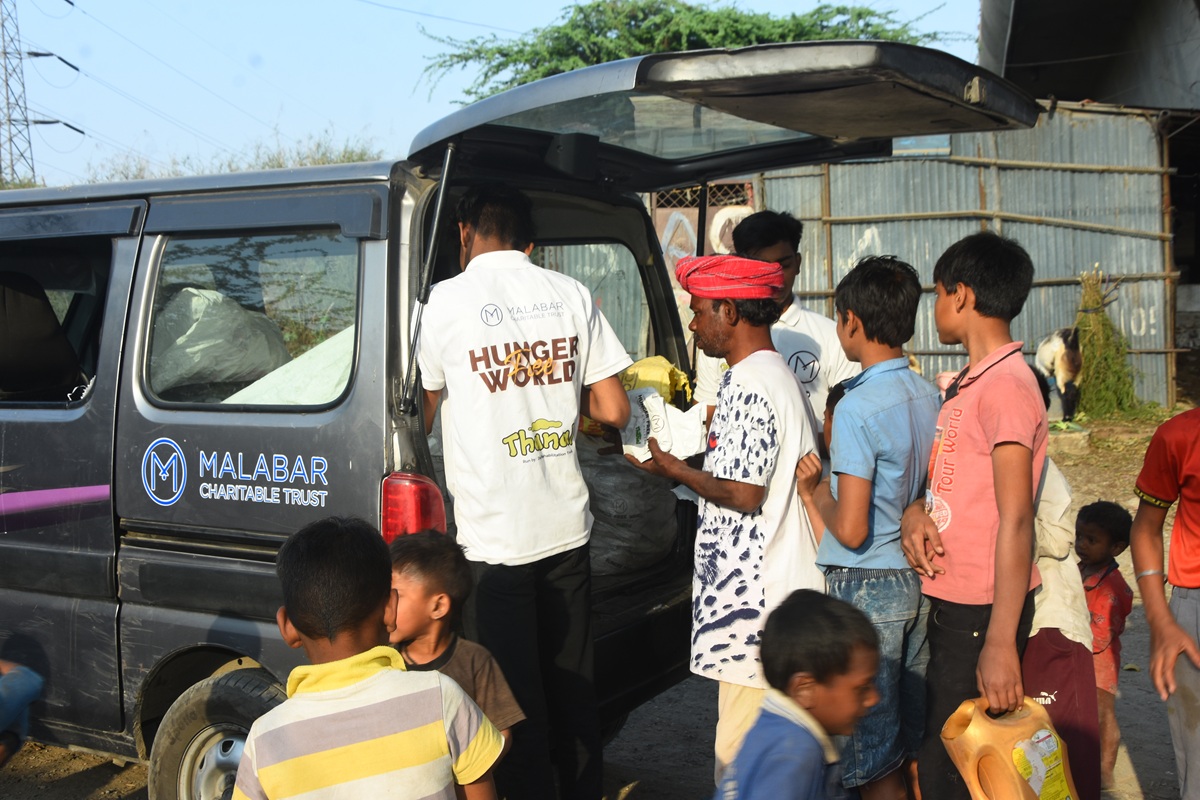
Malabar Group has highlighted the growing role of corporate social investment in addressing complex social challenges with the release of a new impact report that demonstrates how a simple daily meal can generate long-term social and economic value. Released on World Hunger Day, the report, “Impact Stories: How a Daily Meal Opens the Door to a Transformed Life”, details the outcomes of Hunger Free World, the group’s flagship humanitarian initiative. Implemented by Thanal, the Street Meal Distribution Programme has expanded beyond hunger relief to become a platform for healthcare intervention, rehabilitation, shelter access, dignity restoration and family reunification.
The initiative currently operates across 20 states in India and nine countries, including six GCC nations, the United States, the United Kingdom and Zambia. Through its Street Meal Distribution Programme and Micro Learning Centres, Hunger Free World reaches approximately 1.43 lakh beneficiaries, reflecting the scale of the programme’s social footprint. According to the report, regular engagement with beneficiaries has enabled field teams to identify individuals requiring urgent support and connect them with rehabilitation services. Impact stories cited include the relocation of an elderly man in Nagercoil to a care home, rehabilitation support for a bedridden man in Kumbakonam, assistance for a distressed woman in Chennai, family reunification between Udupi and Chennai, and medical intervention and shelter placement for a physically challenged senior citizen in Tiruchirappalli.
“A meal may appear simple, but when it is delivered consistently and with human attention, it becomes much more than food,” said M. P. Ahammad, Chairman of Malabar Group. He noted that trust developed through sustained outreach often serves as the foundation for healthcare access, emotional support and long-term recovery.
The initiative forms part of Malabar Group’s broader CSR framework, under which the company allocates five per cent of its net trading profit towards social responsibility programmes spanning hunger eradication, education, healthcare, housing, women empowerment and environmental sustainability. The report underscores an emerging trend in corporate India, where businesses are increasingly focusing on measurable social impact alongside economic growth and stakeholder value creation.