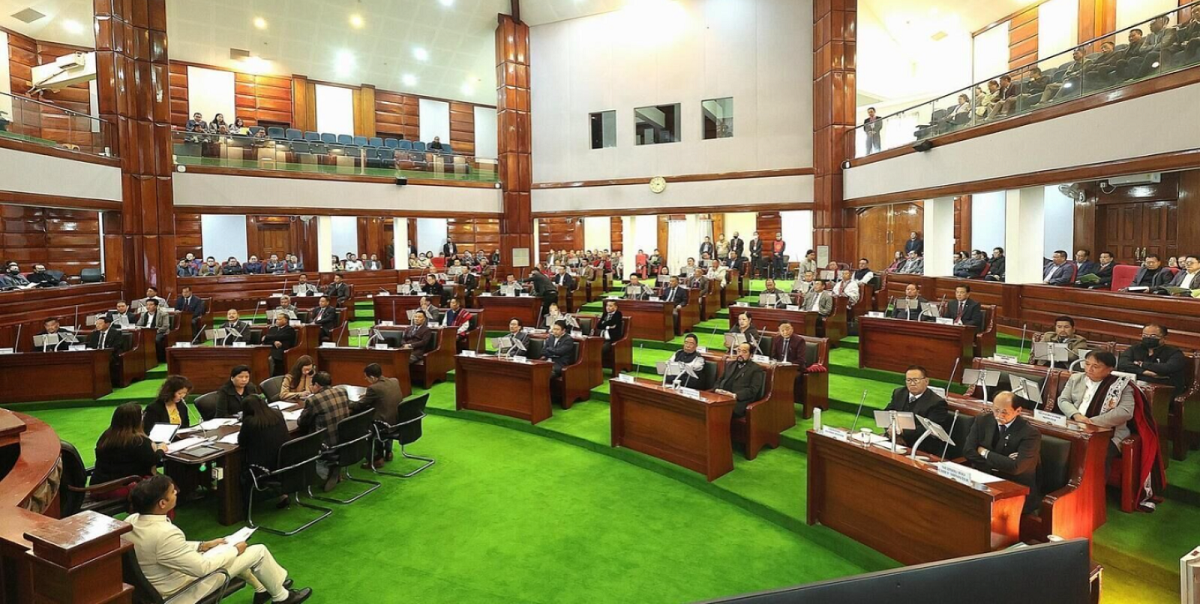
Several political, student, and church organizations in Nagaland have vehemently opposed a directive from the Ministry of Home Affairs that mandates the recitation or singing of the song Vande Mataram before the National Anthem, Jana Gana Mana, at official functions and educational institutions. Prominent groups like the Naga People’s Front (NPF), Naga Students’ Federation (NSF), and the Chakhesang Baptist Church Council (CBCC) have described this mandate as a threat to the Christian-majority community, cultural identity, and the constitutional protections established under Article 371(A).
The NPF has articulated strong resentment toward what it refers to as the “forceful imposition” of Vande Mataram in schools and the Nagaland Legislative Assembly, asserting that this requirement is alien to Nagaland’s ethos and infringes upon fundamental rights as guaranteed by the Indian Constitution. They argue that the directive violates safeguards under Article 371(A), which protects the religious practices, social customs, and customary laws of the Naga people, pointing out that references to Hindu deities in the anthem clash with the monotheistic Christian beliefs prevalent among the Naga.
The NPF has called for the Government of India to reconsider the demand and uphold India’s secular character, ensuring that no community is pressured to dilute its religious conviction. They have also invited collaboration among like-minded political entities and individuals to defend Nagaland’s unique identity and culture.
Similarly, the CBCC has expressed firm opposition to the decree, stating that Vande Mataram cannot be uniformly expected to be chanted by all citizens. CBCC’s executive secretary, T. Chikri, claims that the Ministry’s decision contravenes the principle of religious freedom in a secular state. The council commended the NSF and members of the Nagaland Assembly for their vocal objections to the imposition, noting a disparity in policies where Christian schools in various states face restrictions on religious symbols, while schools in Nagaland are mandated to sing Vande Mataram. They warned that compelling the Christian community to engage in practices against their beliefs would result in increased resistance, reaffirming their commitment to support those defending Christian values and the Church.
Furthermore, the NSF has condemned remarks made by BJP legislator Temjen Imna Along concerning the recitation of Vande Mataram, accusing him of justifying and normalizing the directive despite the organization’s opposition expressed earlier. The federation reiterated that Vande Mataram has strong religious implications linked to Hindu worship, making its mandatory recitation incompatible with the predominantly Christian beliefs of the Naga. They warned that institutionalizing the song in public spaces would breach the spirit of Article 371(A).
The NSF expressed skepticism regarding a Select Committee’s involvement and urged caution against the enforcement of Vande Mataram in institutions, including Nagaland University. To that end, the federation has directed its affiliates to remain vigilant against any attempts to implement such practices, underlining the need to protect the religious and cultural identities of the Naga community.